2026 1.24
Digital / Casette
Shakuhachi by Katsuya Nonaka
Recorded and Mastered by Shintaro Kamijo
Design by Keita Shimamura
Released by ato.archives
ata018
Explanation by Hyotan Namaz
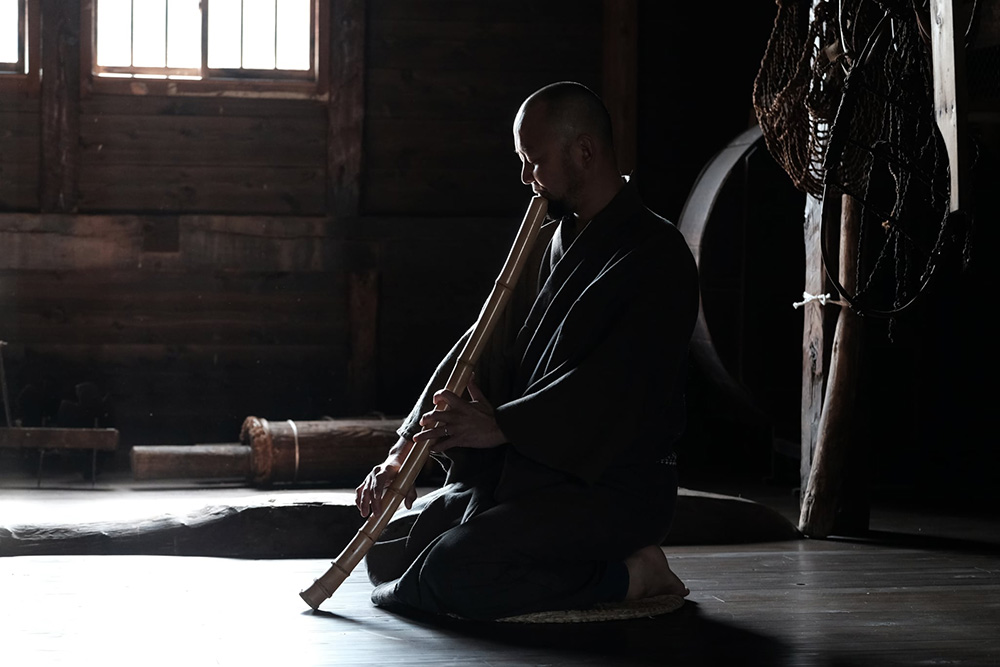
NONAKA Katsuya is a classical shakuhachi player from Fukuoka, Japan. He is a member of the Japanese instrument group Seppuku Pistols. Like the old hyakushō way of life—people who made their living by many kinds of work—he wears many hats. He plays shakuhachi, farms rice, makes documentary films, translates and interprets, and draws illustrations.
As a filmmaker, he made a documentary called Future Is Primitive. It looks at skateboarding culture and the shakuhachi, and asks how traditions are passed down. The film was shown in Japan, the U.K., Croatia, China, and other places, and it was well received.
Nonaka’s background is punk. He loved the “Do It Yourself (DIY)” spirit. He played in bands and spent his days with music and skateboards. After college, he moved to Vancouver to see Japan from the outside. There he happened to hear shakuhachi performances, and he felt pulled to the instrument. At first he studied in a system with strict schools and fixed rules, and he began to feel uneasy with it.
Then he heard OKUDA Atsuya, a master of the jinashi shakuhachi, who came to play in Vancouver. Okuda’s shakuhachi—its build and style—was different from what Nonaka had been studying. Nonaka felt, “This is the shakuhachi I want.” He returned to Japan, became Okuda’s student, and began his path as a jinashi shakuhachi player.
The shakuhachi is a bamboo flute. It has no reed. There are different kinds. The first type Nonaka studied was the jiari shakuhachi. In jiari, the inside of the bamboo is coated and shaped with a hard paste made of lacquer(tree-sap lacquer) and fine powder. This makes the sound louder and the pitch more stable. It became the modern standard, used in the Kinko-ryū and Tozan-ryū schools, and it works well for ensemble playing.
The jinashi shakuhachi is older. Its inside is left mostly natural, with little or no paste. Each piece of bamboo keeps its own voice. The sound can be softer, and it is harder to play. You must match yourself to the flute. For these reasons, jinashi became rare, and fewer people play it today.
Long ago, shakuhachi was used by komusō monks of the Fuke sect of Zen. They played as a form of practice called suizen—“blowing meditation.” In this spirit, technique is not the main goal. The goal is a sound that lives in harmony with nature. The jinashi way keeps this spirit. Players often make their own flutes to honor the life of the bamboo. This matched Nonaka’s DIY roots in punk. To join sound, life, and the land, he left Tokyo and chose a farmer’s life, centered on growing rice.
As both artist and citizen, Nonaka cares about what is under the surface—the “roots.” Cultures change over time. They can grow more technical, more competitive, or more polished. Music once tied to daily life can move into concert halls and gain the weight of “art” and “tradition.” That is not bad by itself. But without strong roots—clear origins and spirit—culture can turn empty and dry out. This is true for shakuhachi, for skateboarding, and for punk. With this in mind, Nonaka holds to jinashi shakuhachi and to the “hyakushō” way of living.
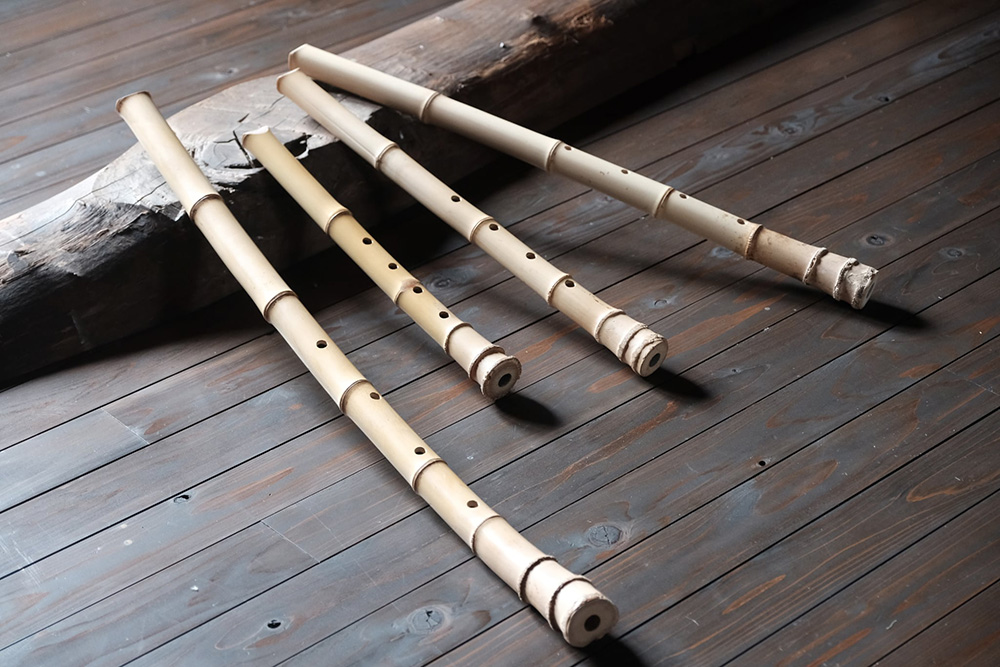
In jinashi making, you shape the bamboo as little as possible. Each flute is very different. The player’s ear and touch bring out each flute’s special voice. On this recording, Nonaka uses different shakuhachi for different pieces.
One key color of the shakuhachi is sawari—the gentle buzz and breath noise that mix with the tone and its overtones. In this album, each piece lets a different bamboo voice and a different sawari come forward. Listen for those changing textures and moods. That is the heart of this music.
Hyotan Namazによるアルバム解説
野中克哉は、福岡県出身の古典尺八奏者。和楽器集団「切腹ピストルズ」のメンバー。「百の生業をもつもの」という「百姓」古来の生き方にも倣い、尺八演奏家としての活動のみならず、農業、ドキュメンタリー映画監督、翻訳・通訳、イラスト作家など様々な顔を持つ。ドキュメンタリー映画監督としては、スケートボード文化と尺八を対比し文化継承の問題に迫る『根っこは何処へゆく』を制作。日本国内だけでなく、イギリス・クロアチア・中国などでも公開され高い評価を受けた。
野中のバックグラウンドはパンクで、DIYといったその精神性にも魅了され、バンドとして活動。同時にスケートボードにも出会い、バンドとスケートボードに明け暮れる生活を送った。大学卒業後、外から日本を見てみようとバンクーバーに移住。現地で尺八の演奏を見るなどの偶然が重なったことで引き寄せられるように尺八を始める。しかし、流派があり、縦社会的秩序が出来上がっていて、楽譜・師範を絶対視する文化に違和感を感じ始めていた頃、バンクーバーに演奏にきていた地無し尺八の名手、奥田敦也の演奏に出会った。奥田の尺八は楽器の作りからスタイルまで、それまでに取り組んでいた尺八とは異なっていた。自分の求めていた尺八はこれだと直感した野中は、日本に戻り、奥田に入門。地無し尺八奏者としての活動を開始する。
尺八は竹で出来たリードを持たないエアリードの管楽器であるが、いくつかの種類があり、奥田の地無し尺八に対して、野中が初めに触れたのは地あり尺八と呼ばれるものであった。地無し尺八は、竹の内側に地(漆、砥粉など)を盛らない古来の作りで、竹の個性がそのまま響きに反映される。一方、地あり尺八は内側に地を盛って管内形状を整え、音量・音程を安定させた近代以降の作りで、合奏や現代邦楽の要請から現代の標準となっている。現在主流となっている琴古流・都山流で使われているのも地あり尺八である。地無し尺八は音が小さく、演奏も難しく、楽器に合わせないと良い音が出ないなどの理由から、徐々に地あり尺八に取って代わられ、現在では演奏人口は少数派となっている。しかし、尺八は元々、虚無僧(こむそう)といわれる普化宗(ふけしゅう:禅宗系の仏教の一宗派)の僧が、修行のため、「吹禅(すいぜん)」として吹いていたものであり、演奏のテクニックよりも自然と調和する音を重視する地無し尺八は、尺八古来の精神を色濃く残している。楽器にしても、それぞれの竹の個性を活かし自分で作ることが重んぜられる。こうした地無し尺八のスタイル・精神性が、パンクのDIY精神に馴染んできた野中には、自然に受け入れられた。そして、その精神性と、演奏・生活・環境を調和させるために、東京を離れ、米づくりなどを中心とした百姓としての暮らしを送ることを決断する。
演奏者として、生活者としての野中は、文化の表層・地表の下にある「根っこ(ルーツ)」を重視する。どのような文化も、発展・進化をしていく中で、技巧的になったり、競技的になったり、洗練されたりして形を変えていく。音楽でいえば、日常や生活の中にあった音が、コンサートホールや演奏会の中に切り出されたり、芸術・伝統の名の下に権威を纏ったりしていく。それ自体は否定されるべきことでは無いが、一方で、その成り立ちであったり精神性であったりといった文化の「根」のところがしっかりとしていないと、文化は空虚なものとなったり立ち枯れてしまう。それは、尺八であれ、スケートボードであれ、パンクであれ同様であろう。そのような問題意識から、野中は、地無し尺八にこだわり、「百姓」というライフスタイルにこだわって活動している。
地無し尺八では、上述の通り、竹の加工を最小限に抑え、竹の個性を活かした楽器作りを行う。そのため、楽器の個体差が大きく、それぞれの持ち味をいかに引き出すかというところにも、演奏者の感性が表れる。今回の録音でも、曲目ごとに異なる尺八が用いられている。尺八の特徴はサワリといわれる複雑な夾雑音(息のノイズや倍音)だが、曲目ごとの竹とサワリが織りなす響き・表情の差異も、このアルバムの聴きどころとなっている。