2026 2.6
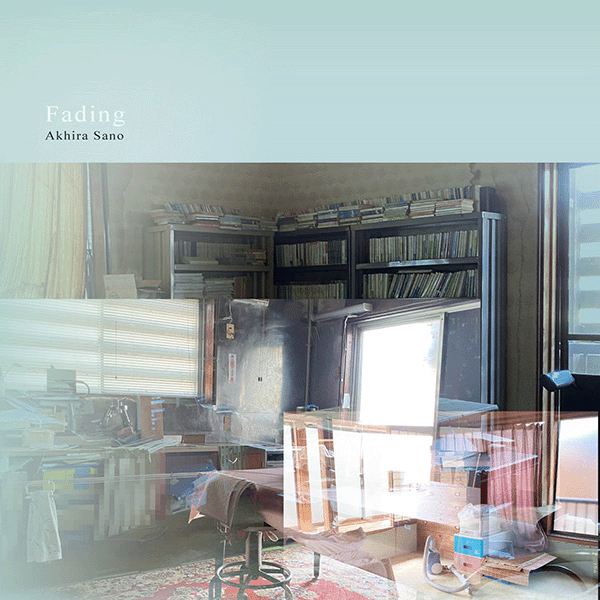
Digital / Casette
Sounds, arrangements and mixing by Akhira Sano
Mastered by Taku Unami
Photography by Akhira Sano
Cover Design by Shinichi Suda
Released by ato.archives
ata020
On the Production
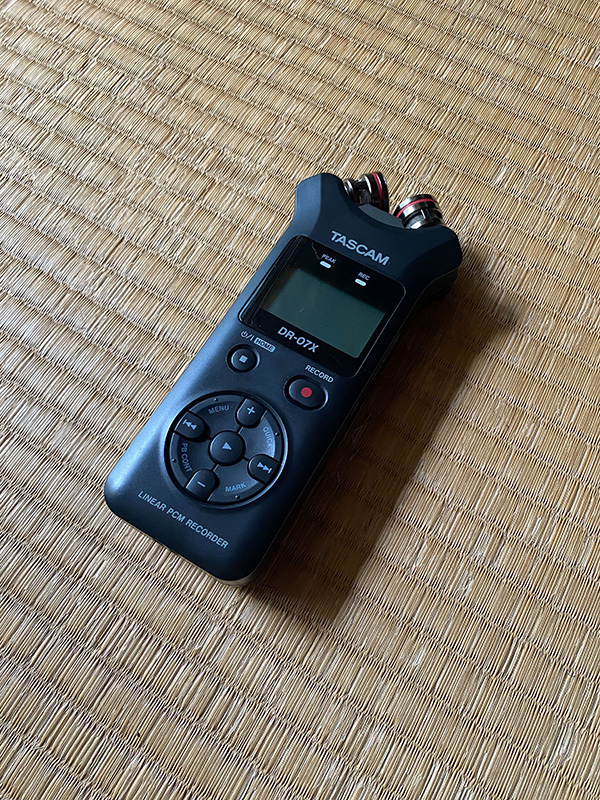
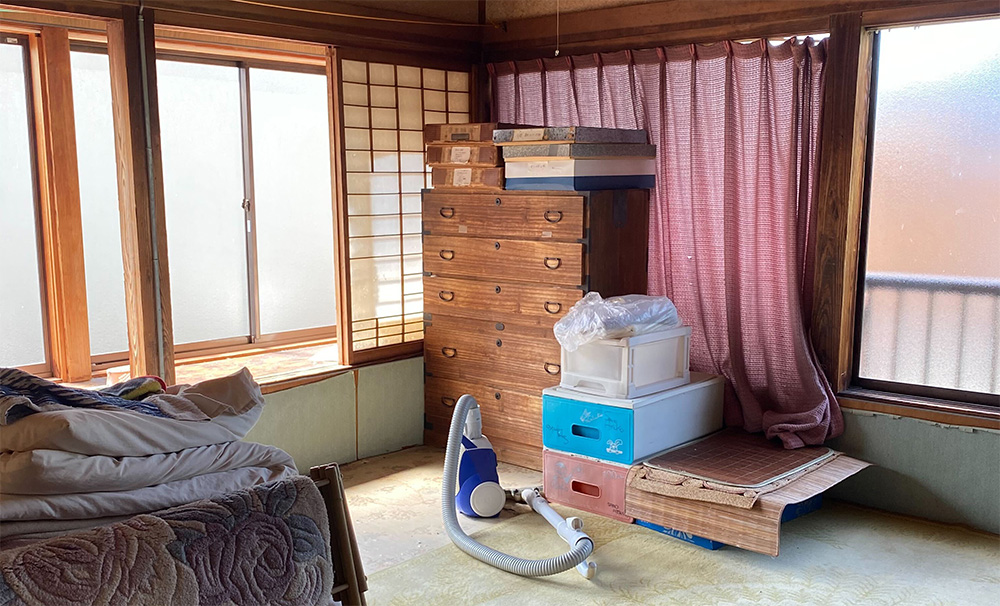
This work is a piece of environmental music created from the sounds and spatial characteristics of architectural structures or materials in the process of disappearance. The project began with the intention of documenting my grandparents’ house—soon to be demolished—as a formative personal memory, and of transforming the “spatial sound” of a place destined to vanish into a work of art.Recordings were made in the entrance, living room, kitchen, bedroom, and two rooms on the second floor, using a Tascam DR-07X. Based on these field recordings, the compositions were produced using the equipment the composer typically employs in their studio practice.
1. Entrance
Although the entrance is the smallest space in the house, its southern orientation allows it to receive abundant sunlight. The light filtering through the frosted glass gives the limited volume of the space a distinctive brightness. The impression of this light is reflected in the composition.
2. Living Room
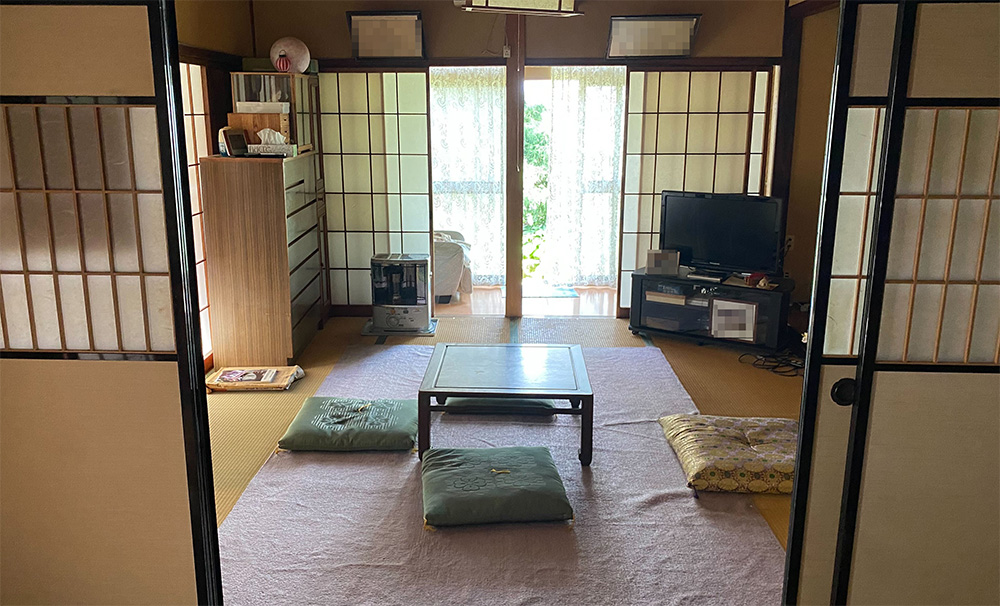
The living room has the greatest spatial expanse within the house and served as the main gathering place for family and relatives. Adjacent to the southern veranda yet located slightly deeper inside, it is a space where separation and connection of sounds coexist.
3. Kitchen
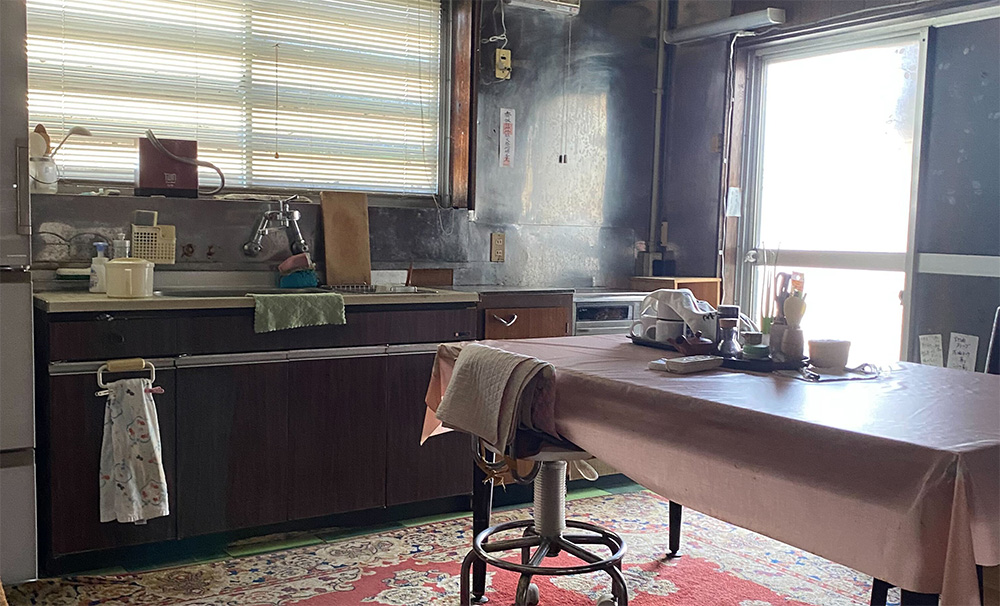
Though moderate in scale, the kitchen feels somewhat enclosed due to its density of material elements. It is also a space where scents linger strongly, evoking a sense of nostalgia. The composition reflects both the material compactness and the emotional spaciousness of this room.
4. Bedroom / Study
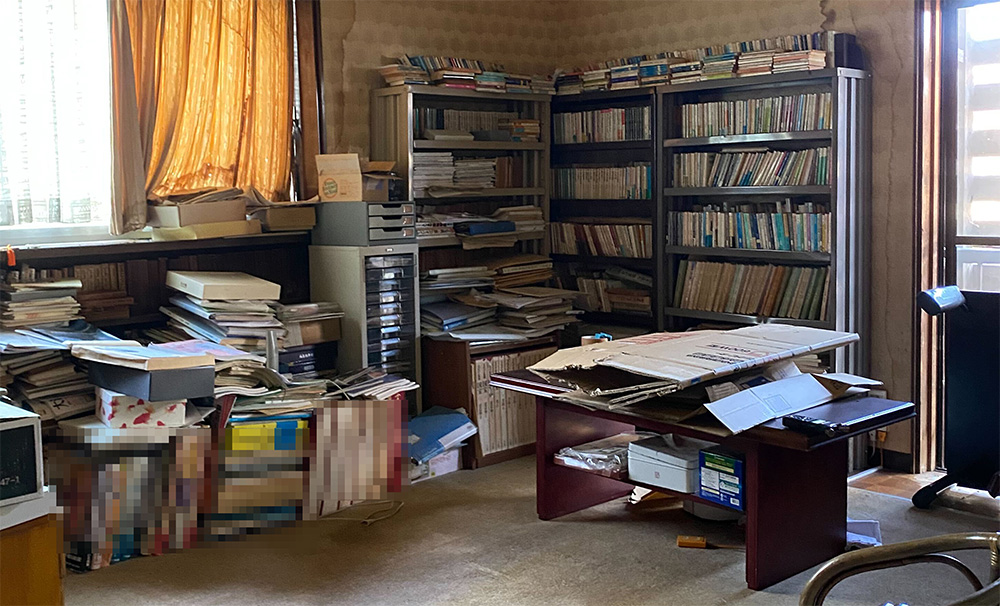
Facing the garden, the bedroom has a strong relationship with external sounds. In the recording, the calls of wild birds visiting the garden can be heard, revealing the way outdoor natural sounds and indoor acoustic environments intersect in a balanced manner.
5. Second Floor – Room 1
The south-side room on the second floor is divided in two by sliding fusuma doors. Its sense of openness and brightness make it one of the most light-filled spaces in the house. Sounds from both the street and the garden easily enter the room, giving it an acoustically open impression.
6. Second Floor – Room 2
The north-side room on the second floor, roughly eight tatami mats in size and including a storage area, is a relatively small and acoustically closed space where exterior sounds are scarcely audible. It was seldom used even before the house became vacant, and the composition conveys a sense of forgetfulness and solitude.
制作にあたって
本作品は、消失過程にある建築構造体あるいは物質を対象とし、そこに内包される空間と、その空間に付随する周囲の音を音源として活用した環境音楽である。制作の動機は、解体予定となっている祖父母の住宅を一つの原体験として記録するとともに、「将来的に存在しなくなる空間音」を作品することにある。録音は玄関、居間、キッチン、寝室、2階の二部屋において、Tascam DR-07Xを用いて収録を実施し、得られた録音素材を基盤に作曲者が通常使用している機材を中心に制作を行っている。
1. Entrance(玄関)
玄関は住宅内で最も狭い空間であるが、南側に配置されているため十分な日照を受ける。摺りガラスを通過する光が特徴的で、限られた体積の空間に対して高い明度を与えており、同時にこの光の印象を楽曲に反映している。
2. Living Room(居間)
居間は住宅内で最大の空間的広がりを有し、家族や親族が集う主要な生活領域であった。南側の縁側に隣接しているが、その奥に位置するため、音の切断と接続が両立している空間である。
3. Kitchen(台所)
台所は空間の規模こそは中程度であるが、物質の密度が高いため、やや閉鎖的に感じられる。また、匂いなどが色濃く残る空間であり、懐かしい感情が呼び起される空間でもある。物質的な狭さと情緒的な広さを楽曲に反映している。
4. Bedroom / Study(寝室・書斎)
寝室は庭に面しており、外部音との関わりが高い。録音では庭を訪れる野鳥の鳴き声が収録されており、外部自然音と室内音環境がバランスよく交差する領域であることを示している。
5. Second Floor – Room 1(2階南側の部屋)
2階南側の部屋は、襖によって二分割される構造である。広がりのある空間性が特徴で、住居の中でも一番明るい印象を持つ部屋である。こちらの部屋も道路側および庭側の双方から外部音が伝わりやすく音響的にも開放的な印象を受ける。
6. Second Floor – Room 2(2階北側の部屋)
2階北側の部屋は約8畳ほどの空間と物置で全体として比較的小さい空間であり、音響的にも比較的閉鎖的で外部音が聞こえずらい空間である。また、空き家になる前から使用頻度の低い空間であったため、楽曲では忘却と寂しさを表現している。